
Tips
New employee welcome gifts for the first 30 days
When to send a new employee welcome gift, what to put in it, and how to trigger it from your HR system so every new hire gets the same first 30 days.
· 4 min read
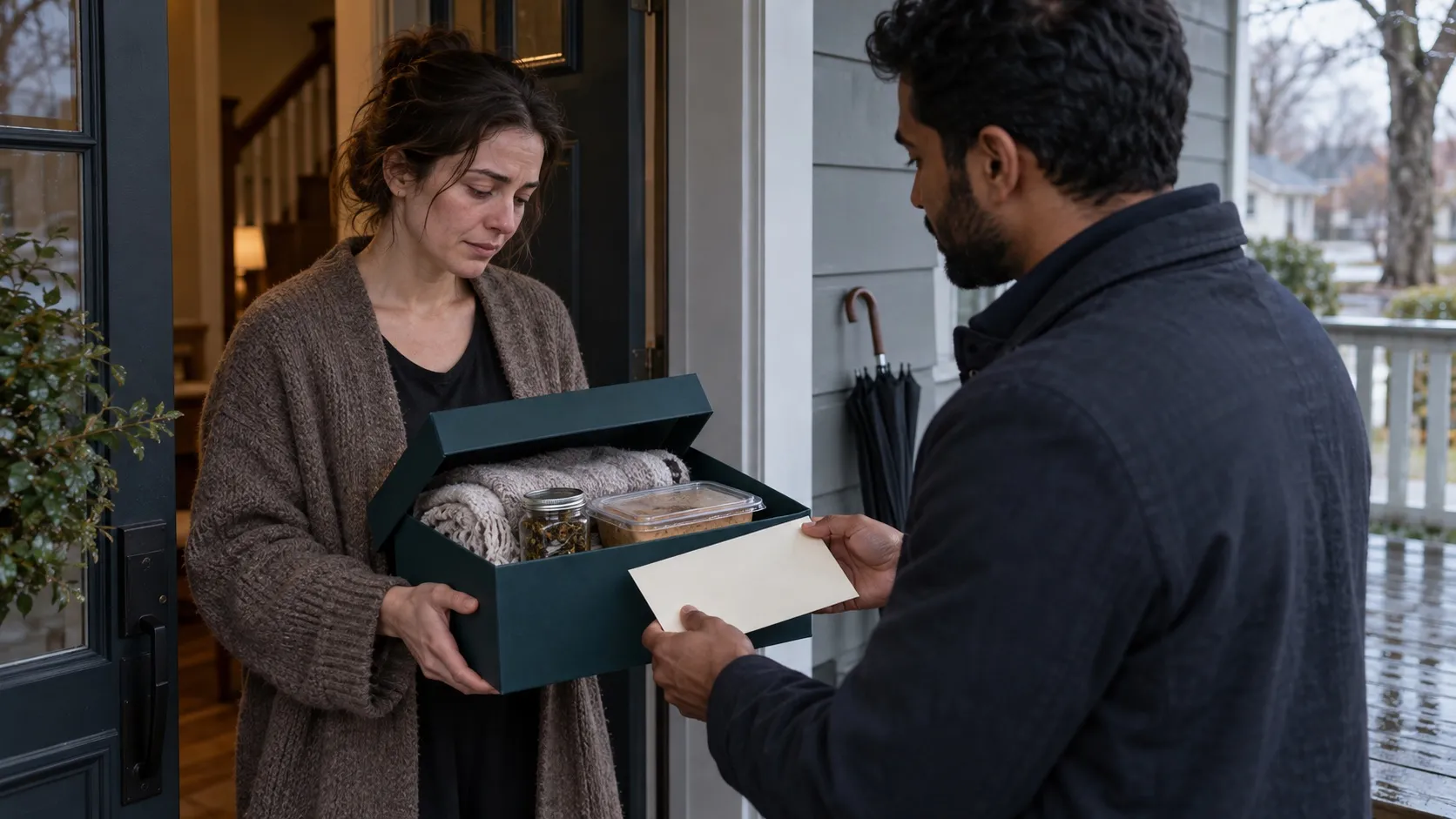
Most appreciation is planned. Birthdays and anniversaries arrive on schedule, and there is time to get them right. Bereavement comes with no warning and no time to plan, and getting it wrong costs far more than a mediocre birthday gift does.
It is also the moment employees remember longest. Years later, people still know who reached out when their mother died.
Nobody is prepared. The person who handles it, often a lone HR manager or an office lead, starts from scratch every time: which florist, which arrangement, what to write, what it costs.
It takes longer than it should. Searching for something appropriate, comparing options, and arranging delivery can easily take most of an hour, at a moment when speed matters.
It is easy to get wrong. Bright, celebratory flowers that look cheerful in a catalog photo can read badly in a house of mourning. A cookie tin may not suit someone who is not eating much. A gesture meant as comfort can land as tone-deaf.
It is uneven. Bereavement gifts usually depend on a manager telling HR. When one employee’s loss is acknowledged and another’s is not, the second person notices, and that can shape how they feel about the company for a long time.
It is unbudgeted. Losses do not follow a schedule. A month with several can strain a small team’s appreciation budget.
The single best thing you can do is write a short bereavement standard now, while nobody is grieving.
It should answer:
With that in place, responding to a loss becomes a short, confident task.
Good bereavement gifts share a few traits: they are understated, they ask nothing of the recipient, and they are useful during a hard week.
What to avoid: anything festive, alcohol, items that require assembly or effort, and anything with a company logo on it.
The note matters more than the gift. Keep it short and sincere.
A simple example: “We were so sorry to hear about your father. Please take the time you need, and know the whole team is thinking of you.”
If writing these does not come naturally to a manager, a short starting draft they can edit is a real help. The words should still be theirs.
Set aside a small reserve for life events each year and track it separately from birthdays and anniversaries. That way a difficult month does not force a choice between responding to a loss and keeping the rest of the program running.
The goal is that any employee who experiences a loss receives the same response, regardless of their role, their location, or how close they are to HR. The standard you wrote earlier makes that possible.
Thankscrate handles on-demand life-event gifts, including bereavement, with curated options and a personal message, so the person responding chooses from a short list. See how it handles bereavement and other life events, so you can respond within a day or two of hearing the news.
Tips
When to send a new employee welcome gift, what to put in it, and how to trigger it from your HR system so every new hire gets the same first 30 days.
· 4 min read

Tips
A first anniversary and a twenty-fifth should feel different. Build anniversary tiers that are fair, affordable, and meaningful at the top.
· 3 min read

Tips
Gift cards are easy to send and easy to forget. Physical gifts feel personal but can miss. Choose by occasion, and offer both where you can.
· 3 min read
The Good Human Company Podcast
Founders, HR leaders, and operators on recognition and culture.

Thankscrate handles birthdays, work anniversaries, and 40+ other occasions for you.