
Gratitude
Your employees notice who got a gift
Inconsistent recognition can do more harm than none at all. Why fairness is the foundation of an appreciation program, and how to build it in from the start.
· 3 min read
Gratitude· · 3 min read
By The Thankscrate team

Points programs are easy to buy and easy to explain. Everyone gets a monthly allowance, anyone can thank anyone, and the points pile up until someone trades them for something in a catalog. On paper, it is a culture of appreciation with a dashboard attached.
Some HR teams describe a familiar arc. A burst of enthusiasm in the first quarter. A slow slide into routine. Then, a year or two in, a program that someone has to police. These are failure modes to watch for when you review a program.
Points get spent on small things. When a thank-you costs the sender nothing and carries a number, people use it for everything: covering a shift, answering a question, sharing a file. All of that is worth noticing. Once it all earns points, a colleague’s ten-year anniversary and a forwarded spreadsheet look about the same.
The ledger needs an auditor. Allowances that roll over, points traded back and forth between friends, balances that add up to real money. Someone in HR ends up reviewing transactions and clawing points back. Nobody enjoys that audit. The reviewer feels like a cop, and the employee whose points get questioned feels accused.
The employee ends up shopping for their own thank-you. A balance is impersonal by design. Weeks after the moment it was meant to mark, the person scrolls a catalog they did not choose and picks something for themselves.
The quiet people can be missed. Peer recognition can favor visibility. People who sit in busy channels and work across many teams have more chances to be noticed. People in the field, on night shifts, or in small teams can collect fewer points, through no fault of their own.
It measures activity. A report that says thousands of points went out this month tells you people clicked a button. Whether the person who spent the spring caring for a sick parent felt that anyone noticed never shows up in it.
Ask employees about recognition that stuck with them and they describe a moment: a note from a manager after a rough quarter, a care package during a long illness, something waiting at home on a fifth work anniversary.
Those moments have a few things in common. They arrived on the day, not when a balance got big enough. Someone who knew the person wrote something only they could have written. The gift was chosen for them, or chosen by them from options that fit. And a ten-year anniversary in the warehouse got what a ten-year anniversary in finance got.
That last part deserves attention in a points program. If recognition depends on peer nominations, differences in visibility can become differences in rewards. A standard for each occasion gives you a baseline that does not depend on nominations.
Peer recognition is worth keeping. A public thank-you in a team channel is free and good for morale. The trouble starts when it is attached to currency. Then the thank-you stops being the point, and the points become the point.
A healthier split looks like this:
If you already run a points program, these questions help decide whether it is working:
If the honest answers point to activity rather than meaning, the fix is deciding which moments matter and handling each one the same way every time, which is what we mean by appreciation infrastructure.
Thankscrate runs the occasions you define from your payroll or HR data, asks for a personal message, and handles the gift. See how employee appreciation works.
Gratitude
Inconsistent recognition can do more harm than none at all. Why fairness is the foundation of an appreciation program, and how to build it in from the start.
· 3 min read

Gratitude
The founder's handwritten card, the custom anniversary gift, the crew dinner. How to keep a tradition special when volume outgrows the person behind it.
· 3 min read
The Good Human Company Podcast
Founders, HR leaders, and operators on recognition and culture.
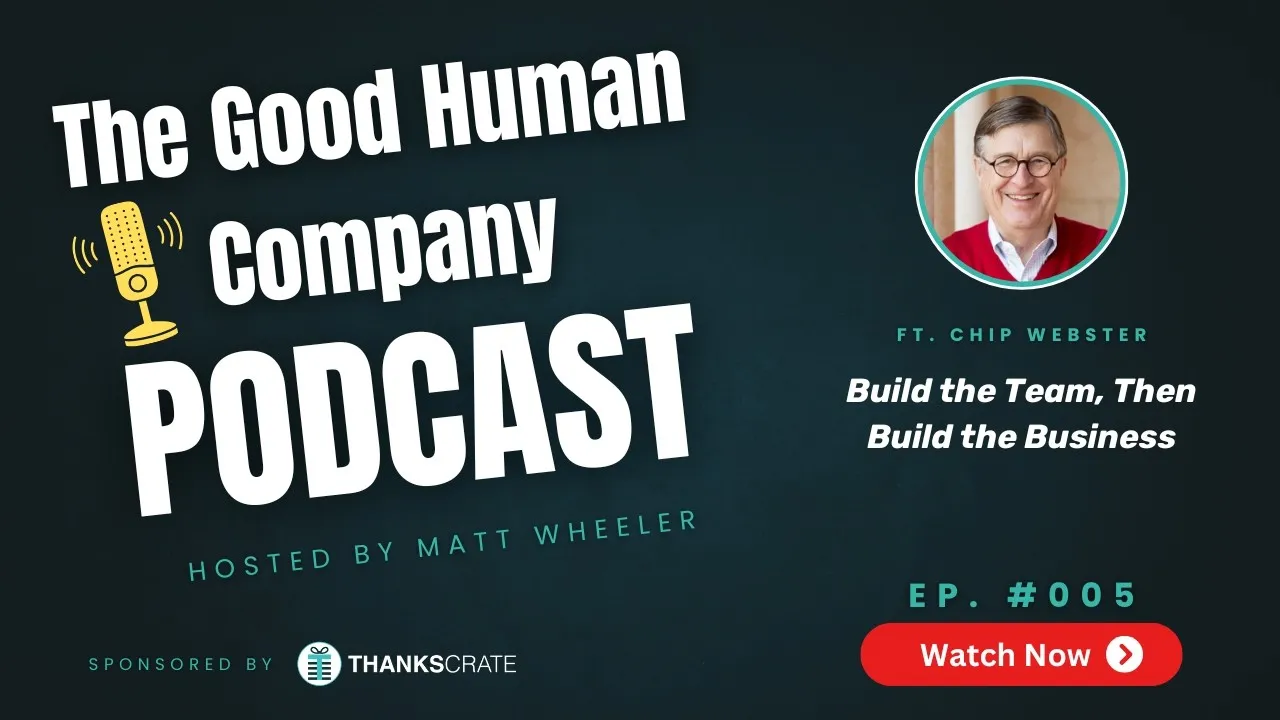
Episode 005
with Chip Webster, Vistage Florida (former)
· 32 min
Thankscrate handles birthdays, work anniversaries, and 40+ other occasions for you.