
Work
One appreciation program for every relationship that matters
Clients, placed candidates, volunteers, board members, and partners all deserve thanks too. How to thank them all from one program.
· 3 min read

Ask employees whose recognition matters most to them and the answer is usually their manager. Ask managers why they do not recognize their people more often and the answer is usually time.
Both are true, and most programs handle the tension badly. Either recognition lives entirely with HR, which makes it consistent but impersonal, or it is left to each manager, which makes it personal but wildly uneven. There is a better split.
Look closely at how recognition actually happens in a growing company and you tend to find the same patterns:
The manager
The program
The manager’s part is the smallest in effort and the largest in impact. The goal is to make that part easy and to take everything else off their plate.
The most effective change is also the simplest: when an occasion is coming up for someone on their team, prompt the manager to write a short personal note. Ask a few days ahead, not the morning of. Make it possible to write from a link in an email, without logging in to anything.
A few lines that mention something specific (“the way you handled the move to the new site this spring”) will mean more than any gift. If a manager does not respond, the gift still goes out with a standard note, so nobody is left out because their manager was busy.
Life does not follow the HR calendar. A new baby, a hospital stay, a loss in the family, a crew that pulled off a hard job: managers see these first. Give them one simple way to request a gift for those moments, with set options and budgets, so they are not improvising on a corporate card and the response is the same across teams.
Managers should not have to think about budgets, tax, shipping, or invoices. Those live with the program:
It is tempting to measure managers on how often they recognize their people. Be careful. Recognition that is done to hit a number reads as exactly that. Track participation so you can help managers who are struggling, not to rank them.
Thankscrate prompts managers to add a personal message through a link, with no login, and handles everything else. See how manager recognition works.
Work
Clients, placed candidates, volunteers, board members, and partners all deserve thanks too. How to thank them all from one program.
· 3 min read

Work
How staffing and recruiting firms can thank placed candidates and the clients who hire them: the moments that matter, the rules to mind, and what to write.
· 4 min read

Work
The short list of employee data a recognition tool needs, what it should never touch, and seven questions to ask any vendor before connecting payroll.
· 3 min read
The Good Human Company Podcast
Founders, HR leaders, and operators on recognition and culture.
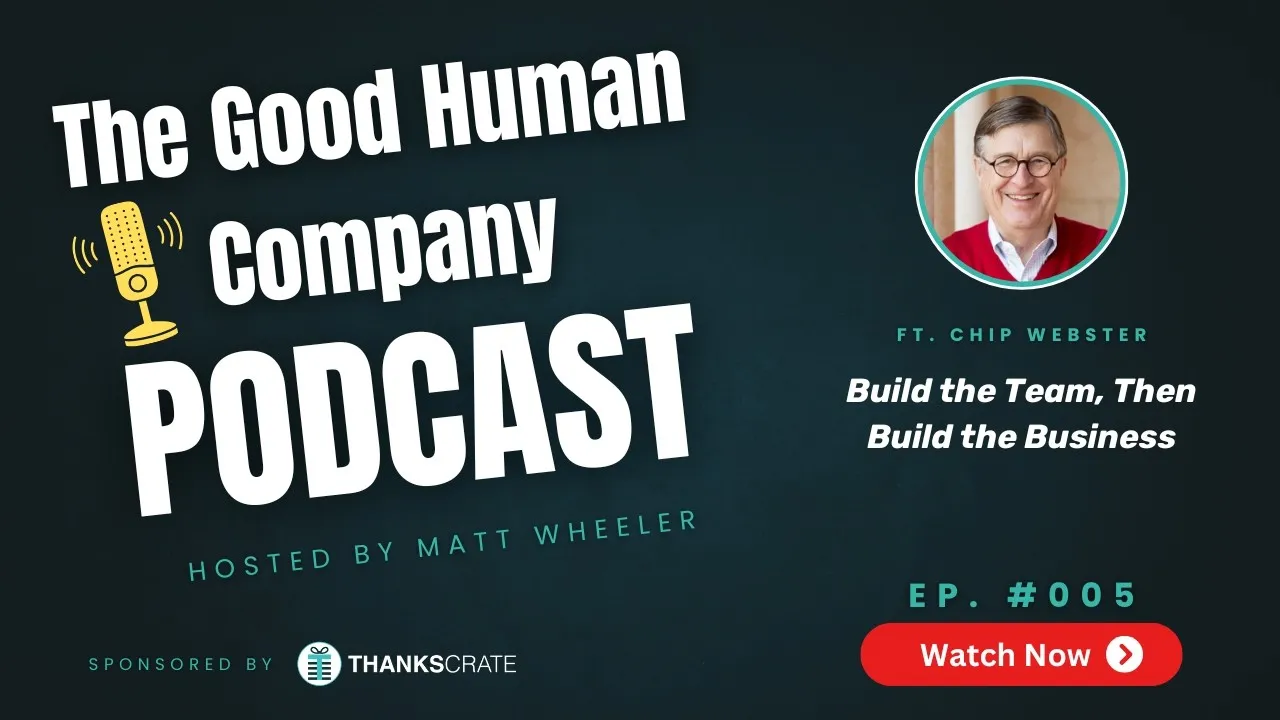
Episode 005
with Chip Webster, Vistage Florida (former)
· 32 min
Thankscrate handles birthdays, work anniversaries, and 40+ other occasions for you.