
Work
Bringing managers into recognition without more admin
Managers know what makes a moment personal and have the least time to act on it. Give them the part only they can do, and take away the rest.
· 3 min read
Work· · 3 min read
By The Thankscrate team

Most companies start an appreciation program with employees. Then, almost immediately, someone asks about everyone else.
A staffing agency wants to welcome the candidates it places with clients. A consulting firm sends holiday gifts to clients and a thank-you when an account renews. A nonprofit wants to recognize volunteers and its board. A sales team wants to send something when a deal closes. Each of these lives in a different spreadsheet, on a different card, run by a different person.
The result is the same fragmentation that makes employee recognition unreliable, repeated across every relationship the company has.
| Relationship | Moments worth marking |
|---|---|
| Clients and customers | Onboarding, contract renewals, project completions, holidays, referrals |
| Placed candidates (staffing and recruiting) | Placement, first week, first anniversary in the role |
| Contractors and consultants | Project milestones, year end |
| Volunteers | Hours milestones, events, year end |
| Board members and advisors | Term milestones, year end |
| Partners and referrers | A referral that closes, an anniversary of the partnership |
One record. When every gift sits in one history, you can see who received what, avoid sending the same thing twice, and answer finance’s question about the total at year end.
One standard. A client gift sent by one salesperson should look like a client gift sent by another. Shared options and budgets keep the brand and the spend consistent.
Less work. The person who runs employee recognition already knows how to send a thoughtful gift on time. Giving them one place to do it for every relationship is far less work than four tools.
Each group keeps its own rules inside the one program:
Gifts to people outside the company come with a few extra considerations:
You do not need to bring every relationship in at once. Pick the group where a consistent gesture would matter most:
Run it for a quarter, then add the next.
Thankscrate keeps employees and contacts in one place, with contacts labeled by type and a full record of every gift. See how customer appreciation works.
Work
Managers know what makes a moment personal and have the least time to act on it. Give them the part only they can do, and take away the rest.
· 3 min read

Work
How staffing and recruiting firms can thank placed candidates and the clients who hire them: the moments that matter, the rules to mind, and what to write.
· 4 min read

Work
The short list of employee data a recognition tool needs, what it should never touch, and seven questions to ask any vendor before connecting payroll.
· 3 min read
The Good Human Company Podcast
Founders, HR leaders, and operators on recognition and culture.
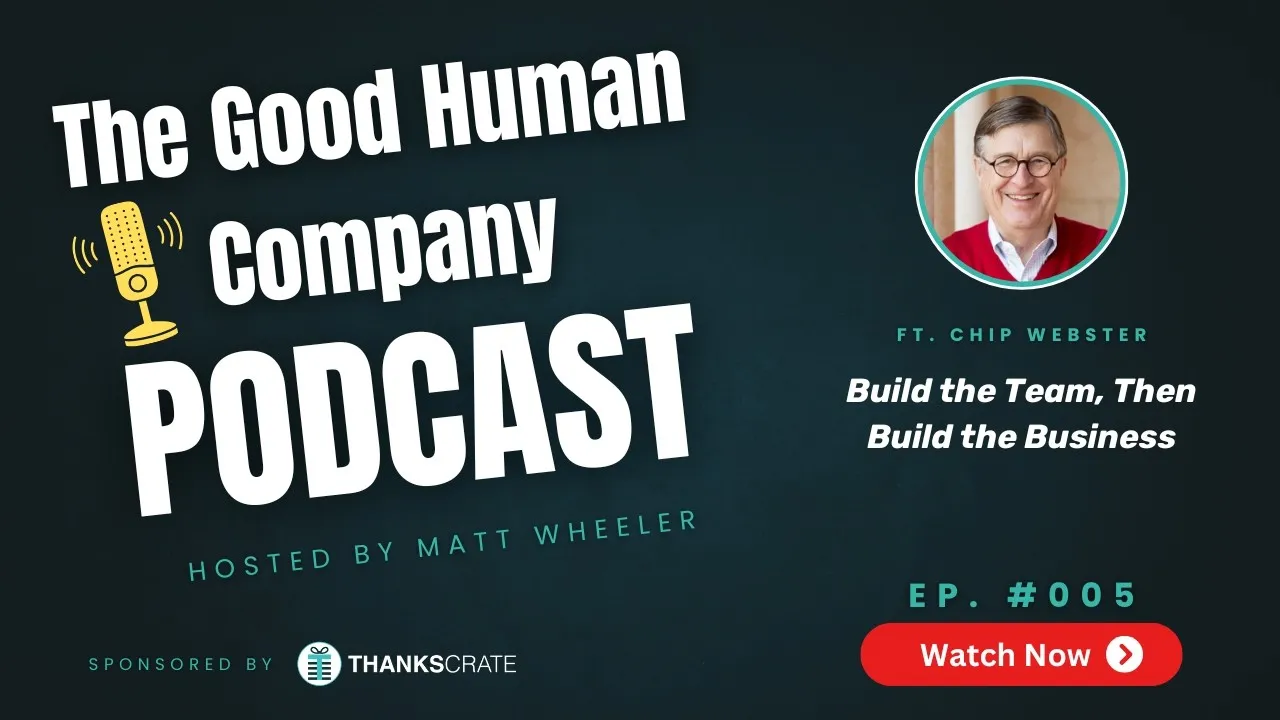
Episode 005
with Chip Webster, Vistage Florida (former)
· 32 min
Thankscrate handles birthdays, work anniversaries, and 40+ other occasions for you.