
Work
One appreciation program for every relationship that matters
Clients, placed candidates, volunteers, board members, and partners all deserve thanks too. How to thank them all from one program.
· 3 min read

Nonprofit leaders feel a particular tension about employee appreciation. Every dollar has a mission attached to it. Spending money on the staff can feel, to some, like spending money on ourselves instead of the community.
That instinct comes from a good place, and it deserves a straight answer. The people doing mission work are the mission’s most important resource, and nonprofit staff often work long hours for less pay than they could earn elsewhere. Looking after them is part of stewarding the mission.
This post covers how to find what you already spend, which moments to fund first, and a one-page plan your board can approve.
Last year’s receipts at most nonprofits show birthday cakes, potluck supplies, a few gift cards for a staff contest, and flowers when someone lost a parent. The spending is real. It is scattered, and nobody totals it.
Add it up for the last year. You may find you already have a program, only an unplanned one. Turning that into a planned program often costs little more and works much better.
With a tight budget, choose occasions where a small gesture has the largest effect.
Do a few things, and do them every time.
When money is tight, the worst outcome is paying for things that never reach an employee:
Look for an approach where you pay only when a gift is actually sent, and ask every vendor whether they have nonprofit pricing. Some waive the platform fee entirely for registered nonprofits.
Board members and finance leads are far more comfortable with a small, fixed program than an open-ended one. Make the budget easy to approve:
Nonprofits are often better than anyone at recognition that costs nothing: handwritten notes, a staff-signed card, a moment at an all-hands to name what someone did. Keep all of that. A gift program sits alongside it and makes sure nobody is left out when the team gets busy.
Nonprofits have more relationships to steward than most companies: volunteers, board members, advisors, and donors of every size. It is tempting to fold them all into one program.
A sensible order is staff first, then volunteers and board members, with donors handled carefully. A small donor may feel that spending money on a thank-you gift undermines their gift, so many organizations keep donor stewardship to cards and personal notes.
Any registered nonprofit gets Thankscrate’s full Scale plan at no cost, including payroll sync and calendar occasions, with no contract or minimum spend. You pay for the gifts you send, at cost, with shipping and handling included. See how nonprofit access works.
Work
Clients, placed candidates, volunteers, board members, and partners all deserve thanks too. How to thank them all from one program.
· 3 min read

Work
Managers know what makes a moment personal and have the least time to act on it. Give them the part only they can do, and take away the rest.
· 3 min read

Work
How staffing and recruiting firms can thank placed candidates and the clients who hire them: the moments that matter, the rules to mind, and what to write.
· 4 min read
The Good Human Company Podcast
Founders, HR leaders, and operators on recognition and culture.
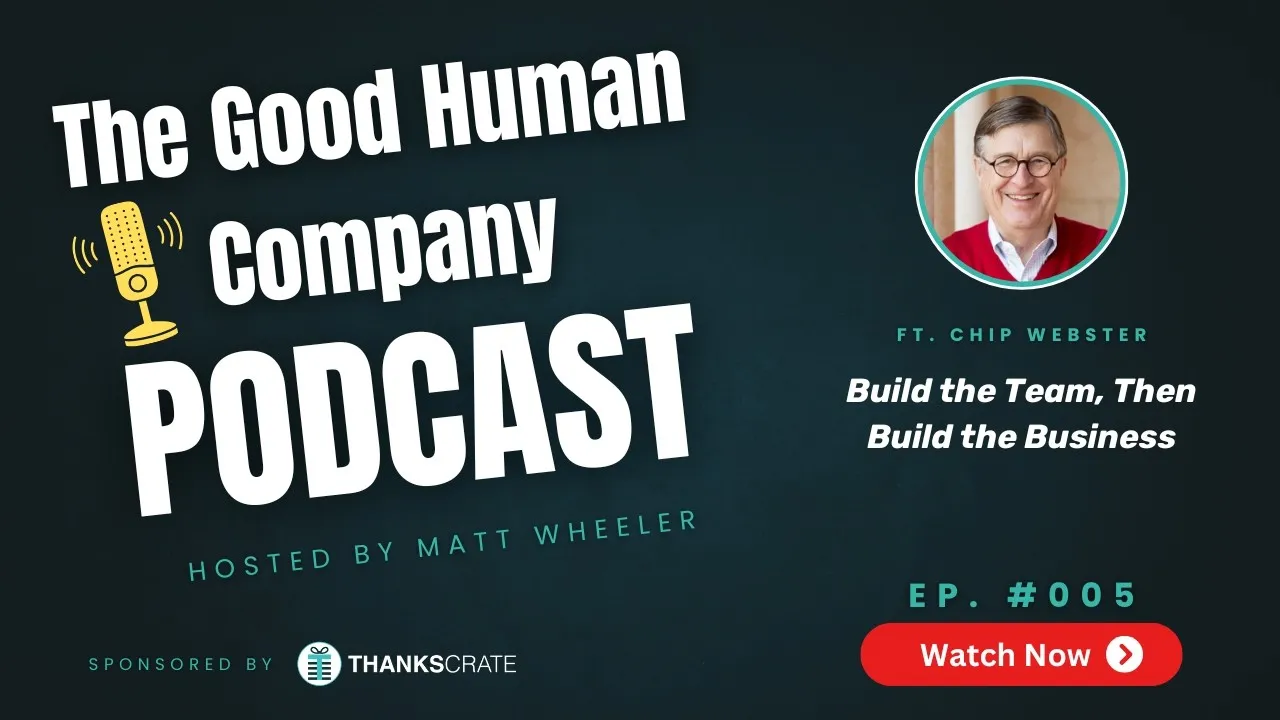
Episode 005
with Chip Webster, Vistage Florida (former)
· 32 min
Thankscrate handles birthdays, work anniversaries, and 40+ other occasions for you.